
Thermal transfer versus direct thermal
Both use a hot printhead. Only one of them leaves an image that is not still a heat-sensitive coating.
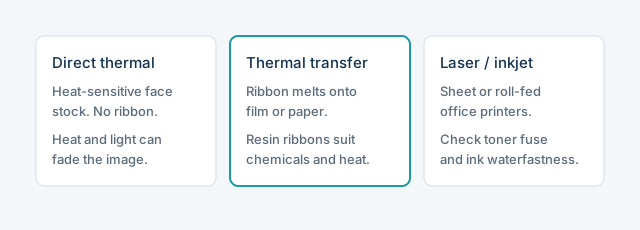
Direct thermal and thermal transfer both use a heated printhead, which is why they are confused. They do not create the same image. Direct thermal develops a coating that is designed to respond to heat. Thermal transfer melts a ribbon onto a receptor. That difference decides autoclave behavior, window-sill fade, and many solvent wipes.
Direct thermal: fewer supplies, narrower jobs
There is no ribbon to inventory. Printers are simple. The coating remains heat-sensitive after printing. A hot autoclave, a vehicle dashboard, or even some poly mailers can darken the image until a barcode grades as fail. Moisture can also dull coatings. For a same-day reagent bottle on a dry bench, direct thermal can be adequate. For a biospecimen archive, it is usually the wrong default.
Thermal transfer: a matched pair
Wax ribbons suit some paper labels. Wax-resin blends add durability. Resin ribbons are the usual discussion partner for polyester films in chemical or abrasion service. If the topcoat does not accept the resin, the image flakes even though the adhesive is fine. Darkness and speed are not cosmetic: they change bar width and ISO/IEC 15416-style quality.
Cost that is not the ribbon price
A ribbon is an extra SKU. Relabeling a freezer after direct-thermal fade is a larger cost. Count labor and specimen risk, not only cents per label, when you compare methods. Labeltaglab does not price products; it only points at that accounting.
Mixed fleets
Some labs keep a direct-thermal printer for shipping and a thermal-transfer printer for vials. That is rational if media cannot be loaded into the wrong printer. Color-code the rolls. A direct-thermal roll loaded into a thermal-transfer printer, or the reverse, produces mysterious quality complaints.
See also the broader printing methods guide and solvent exposure and print durability.
Supplies and training
Thermal transfer adds a ribbon path that can be threaded wrong. Operators who grew up on direct thermal will print pale or wrinkled images until someone shows them the ribbon routing. Budget a laminated diagram at the printer. The extra minute of training is part of the method, not an optional extra.
Dispose of used ribbon according to your waste rules. It is not a specimen, but it can carry printed identifiers. If accession numbers are sensitive in your context, treat spent ribbon as a records-handling item rather than as ordinary trash. This site does not define those rules for you.
Do not mix media rolls in one drawer without labels on the cores. Direct-thermal paper loaded as if it were a thermal-transfer film is a recurring mix-up. Mark the core with the method, the printer model, and the date received. Process control for print is mostly housekeeping.
Questions this page answers
Can a thermal-transfer printer print direct-thermal media?
Sometimes it will make a mark by heating the coating, but that is not a controlled process and still leaves a heat-sensitive image.
Is resin always better than wax?
Resin is generally more chemical- and abrasion-resistant on suitable films. On paper shipping labels, wax can be the intended match.
Why do autoclaved direct-thermal labels turn black?
The cycle is a long, wet version of printing. The coating develops everywhere.
Do I need a new printer to switch methods?
You need a printer that supports the method and, for thermal transfer, a ribbon path. Check the existing hardware before rewriting the SOP.
Sources you can check
- ISO/IEC 15416, linear barcode print quality
- GS1 barcode standards
- ISO 17665:2024, moist heat sterilization
External sites are cited for verification. Labeltaglab is not affiliated with those organizations. See the external links disclosure.